What to Look for in a Home Network Switch
Network Switches - A Consummate Guide
Find out more about how network switches are used, how they work, and what types are available in our guide.

In this guide, we'll accept a closer look at the nearly of import aspects of network switches, give an overview of how they work as part of a wired internet or intranet setup, and place what sorts of additional features or benefits the various models of ethernet switch might provide.
What is a Network Switch?
When asking what is a network switch, the most straightforward reply is that it's a type of wired hub device, importantly used for connecting multiple people and devices to a given computer network.
In the context of domestic, commercial or industrial computer networking and connectivity, the chief part of network switches is to physically link online resources and devices through a single multi-port entry/exit signal. Users connected to the same network via a switch can then be granted access to share some or all of the resource and devices on that network.
Examples of the sorts of resources commonly found wired together through network switches might include:
-
Any incoming net connections, unremarkably via a router
-
Numerous types of external storage and file-sharing modules, such as high-capacity difficult drives or server arrays
-
A broad range of fundamental hardware and peripherals - desktop computers, laptops, games consoles, smart TVs, UPS power supplies, printers and more than
Network switches are often referred to as an ethernet switch or LAN switch (Local Expanse Network). The latter name reflects the fact that they typically rely on cabled connections to back up networking activities across a relatively limited physical space, such as a single office.
How Does a Network Switch Work?
If you are looking to gain a fuller understanding of exactly how an Ethernet switch works, it's important to exist aware of the diverse types available. We will touch on this in more depth over the following sections, but for now, we'll focus on the most basic answer to the question, 'what does an internet switch practice?'
A switch deployed in a computer network provides a single indicate of wired connection for numerous individual devices and resource. Information, online connectivity and more can then be shared between some or all the users on that network, and some models allow these connections to be managed and controlled via an onboard software interface.
At its simplest, a network switch tin can be considered as a big USB hub, simply one specifically made to accept ethernet or RJ45 cables, enabling multi-device sharing of a single wired internet/data connectedness.
A standard internet router will likely include at least one built-in ethernet port, just probably not more than 2 or three for midrange models. To provide a far more than robust connectivity solution that allows you lot to claw in multiple devices and resources - thus creating a more than complex Local Area Network, or LAN – you volition need to add a network switch.
Network switches are typically attached directly to a router or server, and their key concrete feature is providing a greater number of ports for plugging in additional ethernet cables. The main factor in deciding which type and model of LAN switch to buy will exist the demand created by the size and telescopic of the network yous wish to connect through it.
Accordingly, the number of ethernet ports a given switch provides can range from equally few as three, up to l and beyond. Where heavy-duty industrial network switches are needed, it's even possible to find versions offering 100 or more, although these are considerably less common.
What are the Different Types of Network Switches?
At that place are many different types of network switches bachelor, each best suited to different applications. The various types of network switch include:
Stackable Network Switch
A stackable switch is i that can be used either equally a fully standalone hub or combined with multiple other stackable switches to offer an even greater range of connectivity options. When combined, stackable versions are typically designed to perform and answer every bit a single large and complex switch, merely with the combined port count of however many units are connected together.
Unmanaged Network Switch
This tends to be the most basic blazon and effectively functions as an easy way to add together more than ethernet ports to your setup. Unmanaged switches don't normally crave any further input from the user beyond hooking up their devices via ethernet cables, and as such are ofttimes referred to every bit 'plug and play' or a simple LAN switch. These switches are often used in small offices or commercial environments where precise network control is not as crucial.
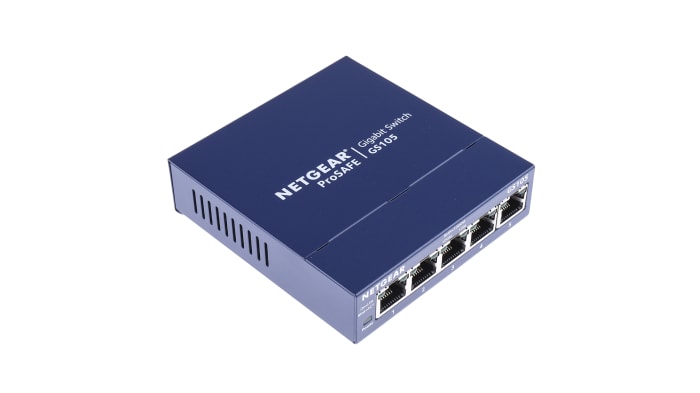
- Main Benefits:
- Plug-and-play
- Simple and easy to use
- Usually cheaper than alternatives
All Unmanaged Network Switches
Managed Network Switch
These switches are used for greater command and advanced functionality. Managed network switches offer a built-in dashboard or similar interface, oftentimes displayed through a connected web browser. This provides admin-level users with a suite of tools for monitoring and tweaking various aspects of the network configuration as traffic flows through it.
Depending on the model in question, options might include anything from access privileges, port mirroring and redundancy, to data transfer rates (port speed), device prioritisation and more. Managed network switches can either be designed as a fully manual switch or a smart switch. The erstwhile tends to be the virtually versatile and is ideal for circuitous networking requirements (server and enterprise-level setups), while smart switches are unremarkably more convenient but provide a limited range of configuration options.
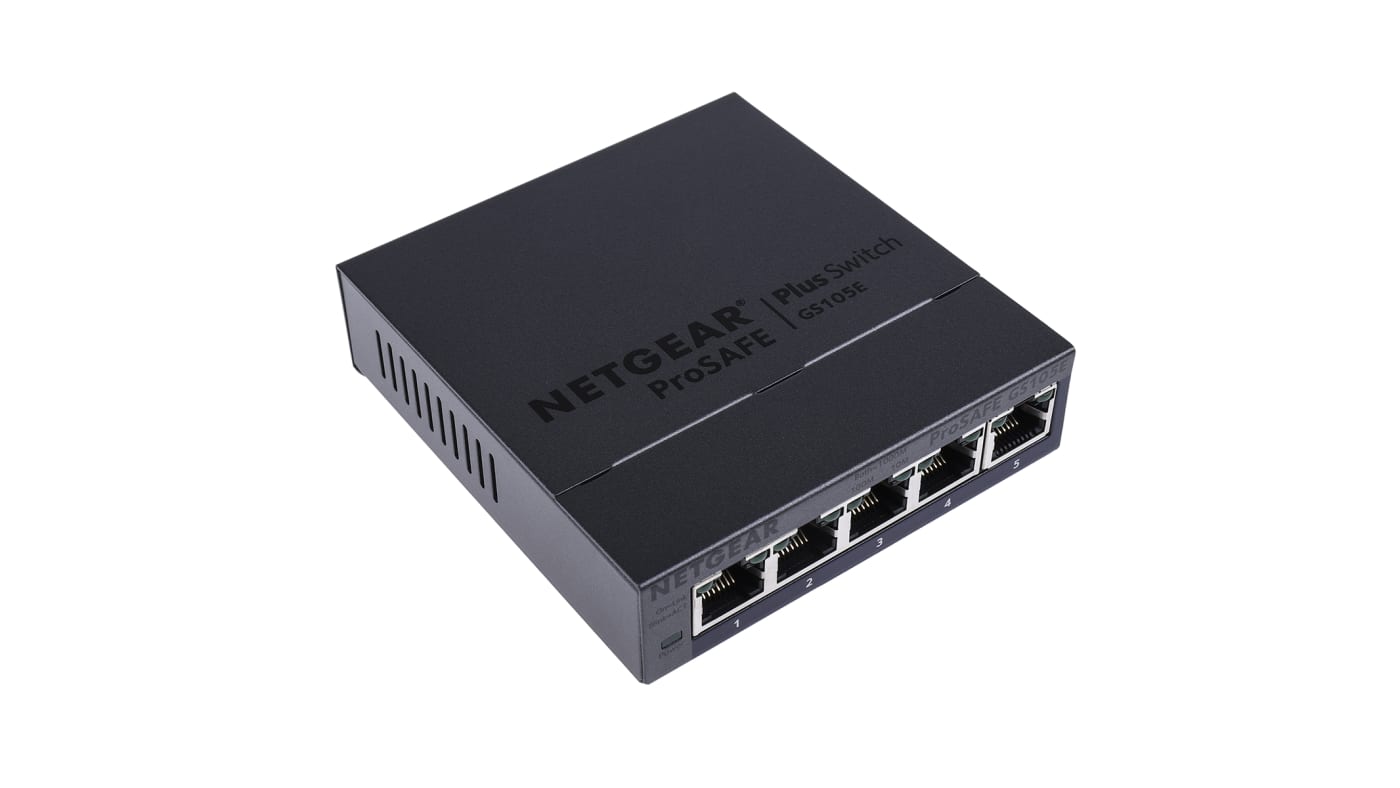
- Main Benefits:
- Customisable
- Features a handy user interface
All Managed Network Switches
PoE Network Switch
Regardless of whether you opt for a managed or unmanaged networking hub, y'all may also choose a PoE or 'Ability over Ethernet' switch.
These models enable power to exist transferred to uniform devices via continued RJ45 cables, equally opposed to just data. If your network includes several PoE-enabled devices, choosing a switch with this feature included can consequence in a far neater and more than flexible solution, dramatically cut down on excess cabling (notably to wall sockets), and enhancing overall LAN scalability and reliability.
Please note that not all hardware is intrinsically PoE compatible – you volition need to check the specifications for each device yous wish to connect.
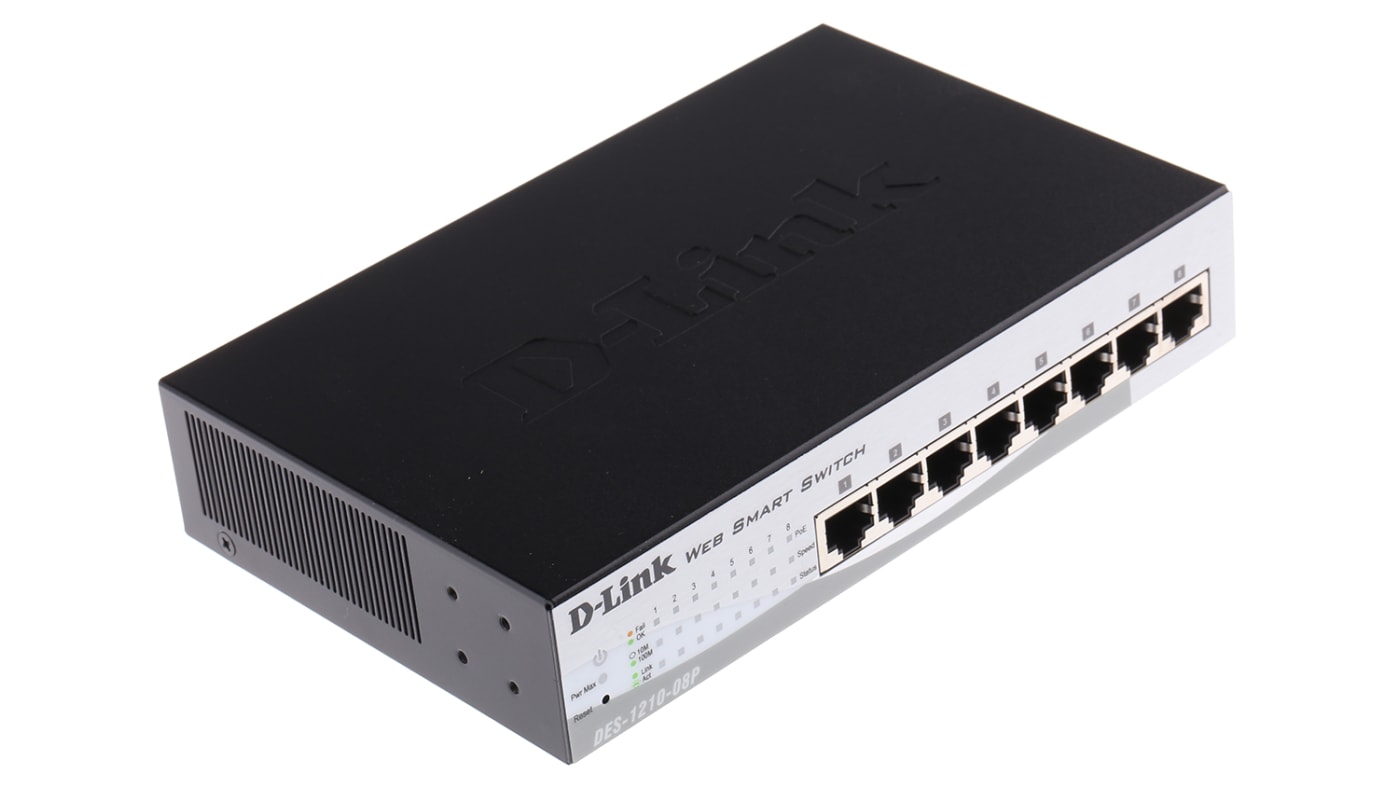
- Mutual PoE-Enabled Devices:
- VOIP phones
- IP surveillance cameras
- APs and RFID readers
All PoE Network Switches
What is the Difference Betwixt Network Switches and Routers?
When information technology comes to router vs switch, many people often confuse these closely related pieces of hardware. In exercise, though, the cardinal divergence between a switch and a router is fairly straightforward once you empathize what a switch does. As we've already covered, a switch allows multiple devices on the aforementioned network to communicate with each other.
A router, meanwhile, allows multiple different networks to communicate with one another. This is the role played by a domestic ISP-supplied Wi-Fi router, for example - it communicates with external networks to deliver an internet connection into the property from exterior. A network switch cannot practice this. Instead, it exists to provide greater versatility and flexibility on the network a router brings in.
The confusion betwixt routers, switches and hubs typically arises because some hardware models tin can offering a limited range of functions taken from all iii of these device types, virtually often in the form of multiple congenital-in ethernet ports. However, it's worth noting that fifty-fifty when certain features of a router, hub and network switch are combined into a single device, the capabilities and roles of each remain technically distinct from one another.
What Speeds Can Network Switches Handle?
When trying to pick the best ethernet switch for a given set of networking requirements, virtually suppliers and manufacturers tend to listing their products according to 1 of three or more general speed categories. These are:
-
Fast Ethernet switches (FS) - x/100 Mbps (standard IEEE 802.3u)
-
Gigabit network switches (GS or JGS) - 10/100/1000 Mbps (standard IEEE 802.3-2008)
-
Ten-gigabit network switches (GSS) - ten/100/m/10000 Mbps (standard IEEE 802.3a)
You may also see diverse other ethernet speeds and standards noted, such as 2.five Gbps, 5 Gbps, 25 Gbps, forty Gbps, 50 Gbps or 100 Gbps. These tend to be developed for more specialised applications.
It is worth keeping in mind that the all-time network switch for domestic use isn't necessarily going to be the best network switch for pocket-size business, industrial, or enterprise purposes.
In fact, each of these applications will have considerably dissimilar requirements to consider, largely depending on the scale and speed of connectivity you need to create a stable and potent-performing network. While speed is always an important consideration, some other key specification is the number of ports the specific switch offers.
More than ports mean greater flexibility across the network, but the corporeality of traffic able to menstruation through the network at any one time - in other words, the number of continued devices and users a network tin comfortably support - will exist limited past diverse factors, non least the bandwidth of your internet connection.
How Many Network Switch Ports Practice You Need for Your Network?
In trying to make up one's mind how many network switch ports a detail setup requires for optimal convenience and performance, it'southward wise to consider the post-obit factors:
-
How many wired devices you desire to connect, bearing in mind potential future device purchases
-
How much you lot are willing to spend on a network switch
-
Whether y'all would adopt to utilise a managed or unmanaged switch
-
Whether you crave or can brand use of avant-garde PoE models (either at present or in the futurity)
-
What sort of bandwidth your current router and/or internet connection can comfortably back up, and whether yous may need to upgrade
Popular choices for abode networking frequently include minor-to-medium sized hubs, such equally 4-port, v-port or 8-port network switches. Meanwhile, while more than complex enterprise or server networks may require far more capable hardware such every bit a 64-port PoE switch.
View Our Network Switches
Popular Network Switch Brands
Some of the virtually popular brands known for the quality, reliability, and advanced functionality of their network switches and related products include:
FAQs
Are Network Switches Secure?
Certain models permit for far greater visibility and control over who gains admission to your network. Managed switches are typically more secure than unmanaged versions, as the latter generally characteristic 'open up' ports - meaning anyone with concrete access to the switch can theoretically connect any piece Ethernet-enabled hardware, and instantly be admitted to the network via that device. Managed switches commonly include options to prevent this.
Are Network Switches Plug-and-Play?
Simple unmanaged LAN switches tend to be plug-and-play and are straightforward to bring together or disconnect from. This tin be advantageous in environments where security is not critical, such equally in a domestic setting. For effectively control, admitting with greater complication when it comes to configuring and joining a network, choose a managed or smart switch.
Can You Connect Network Switches?
Yes, if the switches in question are specified every bit 'stackable'. If so, they will typically function as a single switch when continued, merely with the combined port count of all the switches in the assortment.
Tin a Network Switch Go a Virus?
While the answer to this question can, in sure circumstances, be 'technically yes', the more than helpful respond is 'not ordinarily', as information technology comes down to what sorts of firmware the switch in question is operating, and how it'southward used and updated.
As with a router, in security terms, information technology is more helpful to think of a switch as a simple bridging accessory, rather than a virus-vulnerable device in itself. In this sense, fifty-fifty if viruses don't particularly target switches per se, they can certainly be transferred to more vulnerable devices via a network - if an infected file is shared and opened by other users, for instance. It's worth noting that hardware viruses can't typically be transferred directly to other connected devices via a switch or router without any individual user agency. Some sort of manual end-user action, such every bit running a compromised programme, is almost ever required for infection of a specific device to occur.
How Long Do Network Switches Last?
Previously, it was thought that a low-to-average life expectancy for switches and comparable items of networking gear should generally be somewhere in the region of five years. Today, improved hardware implementation, more avant-garde engineering science, lower ability draw and reduced heat generation can all hateful that switches might well last much longer than they once did. While there is no firm answer to this question, you are likely to see considerable degradation in performance long before a network switch gives out entirely, if it e'er does.
Tin a Network Switch Exist Wireless?
Wireless network switches practice exist, merely they are non widely used. Wireless access points tend to involve some degree of compromise in terms of throughput and bandwidth compared to wired versions, especially when multiple devices and users are connected simultaneously. While exceptions practice exist, other practical considerations make a wired switch a better option in most scenarios.
Tin a Network Switch Be Overloaded?
Yes, for several different reasons - insufficient bandwidth, too many users or devices continued at one time, so-called 'broadcast storms' (basically an unexpected asking overload), outdated hardware, or ISP throttling, to proper name simply a few.
A managed switch makes troubleshooting much easier but if y'all keep to experience issues, it may exist time to upgrade to a network switch that better meets the demands of your network.
Where to Next?
Source: https://uk.rs-online.com/web/generalDisplay.html?id=ideas-and-advice%2Fnetwork-switch-guide
0 Response to "What to Look for in a Home Network Switch"
Post a Comment